

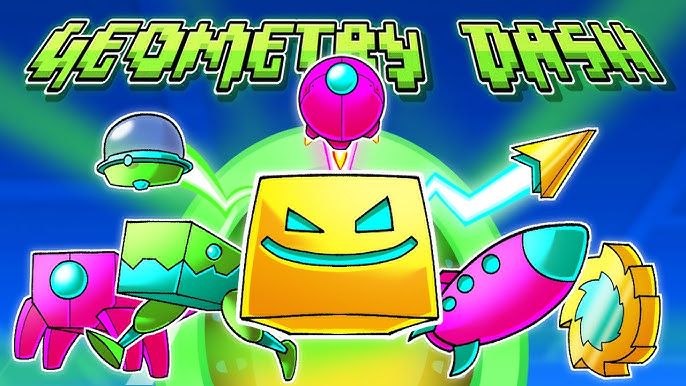
Geometry Dash was developed by Robert Topala, a Swedish developer known online as RobTop. Released in August 2013 for iOS and Android, the game was initially a side project — a simple idea combining rhythm, timing, and one-touch gameplay. Yet, what started as a small indie experiment quickly exploded into one of the most successful and recognizable mobile games in history.
Topala’s goal was straightforward: to create a challenging yet rewarding platformer where every jump matched the rhythm of the music. The result was a minimalist but mesmerizing experience that hooked players from the very first beat.
How Geometry Dash Works
At its core, Geometry Dash is a rhythm-based action platformer. Players control a small square (or “cube”) that automatically moves forward through a series of obstacle-filled levels. The only control? Tapping the screen to make the cube jump.
Sounds simple? Think again.
The game’s brilliance lies in its precision. Every jump must be timed perfectly to avoid spikes, pits, and moving traps — all synced to the rhythm of the background music. One small mistake, and you’re instantly sent back to the beginning.
This “restart loop” may sound punishing, but it’s part of the game’s addictive charm. Players improve through repetition, learning every beat and pattern until they achieve the perfect run.
Levels and Game Modes
Geometry Dash’s official version includes 21 main levels, each with unique music tracks and visual themes. These levels range from beginner-friendly stages like Stereo Madness and Back on Track to brutally difficult ones like Deadlocked and Fingerdash. Completing them requires precision, patience, and rhythm.
Each level introduces new mechanics — from gravity portals that flip the screen upside down to flying sequences where you control a rocket-like ship through tight spaces. Over time, the game expands far beyond a simple jump-and-avoid platformer, turning into a creative playground of movement and music.
Aside from the cube mode, Geometry Dash features multiple game modes, including:
-
Ship Mode – Fly through narrow tunnels with delicate control.
-
Ball Mode – Switch gravity as the ball rolls across platforms.
-
Wave Mode – Control a wave pattern that moves up and down continuously.
-
UFO Mode – Jump repeatedly to float through obstacles.
-
Robot and Spider Modes – Add complex movement patterns and new gameplay twists.
This variety keeps the gameplay fresh and exciting — no two levels feel exactly the same.